Absolutely! Here’s the revised version of the article “From Grandparents to Grandkids: Passing on Hindi Across Generations” with your five enhancements included:
From Grandparents to Grandkids: Passing on Hindi Across Generations
In today’s fast-paced and globalized world, NRI families often face the challenge of preserving their cultural identity while adapting to new environments. One of the most powerful tools in keeping that connection alive is language — particularly, Hindi.
Passing on Hindi from grandparents to grandchildren isn’t just about vocabulary or grammar. It’s about preserving memories, traditions, and relationships that define a family’s heritage.
🧓👧 A Bridge Between Generations
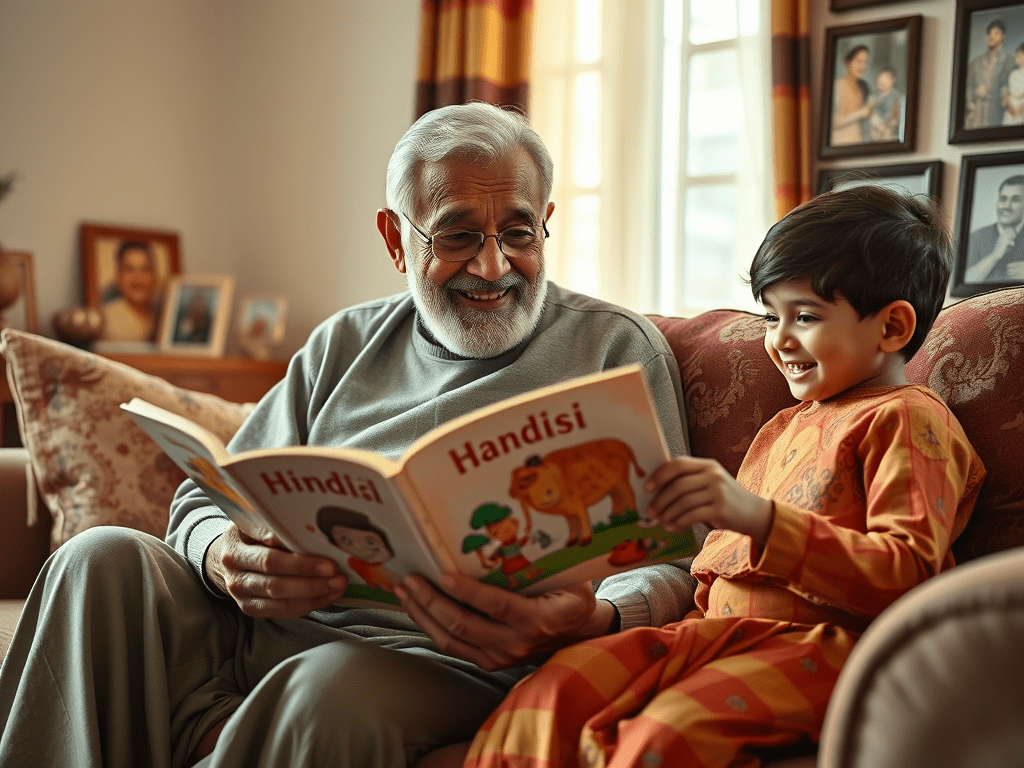
Grandparents are the living libraries of family stories, customs, and values. When they speak to their grandchildren in Hindi, something magical happens — a cultural thread is woven across generations.
Personal Anecdote
“When my daughter started learning Hindi, she began video calling my parents every weekend to practice. What started as language learning turned into deep, emotional bonding. Now she sings old Hindi songs with her Dadi.” – Ritu, NRI mom in Canada
🌱 Why It Matters
- Preserving Cultural Identity
Language connects us to festivals, rituals, stories, and traditions. Hindi keeps the soul of Indian culture alive in NRI homes. - Strengthening Family Bonds
Shared language creates space for emotional intimacy and respect between generations. - Cognitive & Social Growth
Bilingual kids tend to develop better problem-solving, multitasking, and cultural empathy. - Confidence in Heritage
Knowing Hindi helps kids feel proud of where they come from, even while embracing other cultures.
💡 Reader Reflection Prompt:
Do your children know how to say “Hello” or “Thank you” in Hindi? Try teaching them a few simple phrases today! like “Namaste” or “Danyawad”
📚 Case Study: The Mehra Family
Living in the UK, the Mehra family made a conscious decision to teach their kids Hindi. They set up weekly storytelling sessions with the grandparents via Zoom. The kids began retelling the stories in Hindi during school “show and tell,” and soon, even their friends wanted to learn a few words.
This not only helped build strong family bonds but also created a ripple of cultural pride in their wider community.
🛠️ Tips for Passing on Hindi Successfully
- Start Early – Children absorb languages easily at a young age.
- Make It a Habit – Use Hindi at home, even if it’s just for greetings or mealtime conversations.
- Involve Grandparents – Ask them to sing lullabies, tell stories, or share family history in Hindi.
- Use Media – Watch Hindi cartoons, listen to rhymes, or play learning games.
- Enroll in Classes – Structured learning can help children grow in fluency and confidence.
📸 Visual Elements to Include (for blogs/websites):
- A photo of a grandparent teaching a child to write in Hindi
- A snapshot of an NRI family celebrating Diwali
- A child video calling grandparents with Hindi flashcards
These images create emotional resonance and highlight real-life moments of language sharing.
🌐 Resources for NRI Families
Here are a few helpful tools to support Hindi learning:
- OnlineTutrio.com – Personalized Hindi tutoring for kids (great for NRIs)
- Duolingo – Hindi Course
- Chalkboard Academy – Hindi for Kids
- HindiUSA.org – Cultural and language programs in the US
🌍 Final Thoughts
Passing on Hindi is more than a language lesson — it’s a gift of identity, connection, and culture. It strengthens family bonds, preserves heritage, and builds confident children who know where they come from.
From bedtime stories with Dadaji to holiday songs with Nani, every Hindi word spoken becomes a treasure passed from generation to generation.
✨ Reader Prompt:
What’s one Hindi word or phrase that holds a special meaning in your family? Share it with your child today — and tell them why it matters.
 Go-To Blog for Everything!
Leave a comment