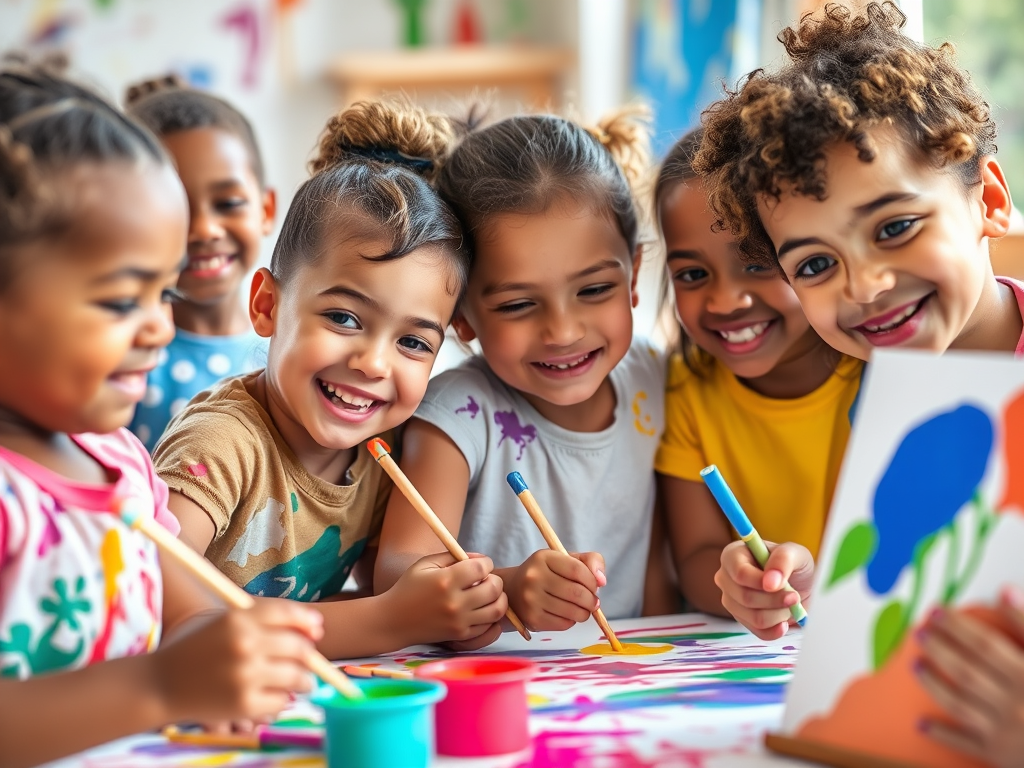
Painting is more than just a fun activity for children; it plays a vital role in their overall development. From boosting creativity to improving emotional well-being, painting has numerous benefits that help shape a child’s personality and skills. Let’s explore why painting is essential in children’s lives and how it contributes to their growth.
1. Enhancing Creativity and Imagination
Painting allows children to express their thoughts, emotions, and ideas in a visual format. It encourages them to explore their imagination and create unique artwork. Whether they paint a beautiful landscape or an abstract design, the freedom to choose colors and patterns enhances their creativity.
2. Developing Fine Motor Skills
Holding a paintbrush, making strokes, and mixing colors require precision and coordination. These activities improve fine motor skills, which are essential for writing, typing, and other everyday tasks. The controlled movements help strengthen hand-eye coordination and muscle control.
3. Encouraging Emotional Expression
Children may find it challenging to express their emotions through words. Painting provides them with a safe and constructive way to communicate their feelings. Whether they use bright colors to express joy or darker shades to convey sadness, art becomes a powerful medium for self-expression.
4. Improving Focus and Patience
Creating a painting requires time, effort, and concentration. Children learn to focus on details, stay patient while mixing colors, and complete their artwork with dedication. This helps develop persistence and determination, essential skills that benefit them in academics and life.
5. Boosting Self-Confidence
When children create a painting, they feel a sense of achievement and pride. Displaying their artwork at home or in school boosts their self-esteem and motivates them to continue exploring their artistic talents.
6. Strengthening Cognitive Abilities
Painting involves decision-making, problem-solving, and critical thinking. Children learn about colors, shapes, and patterns, which enhance their cognitive skills. Understanding how different colors blend or how to create depth in a drawing also stimulates their brain development.
7. Reducing Stress and Anxiety
Art has therapeutic benefits, helping children relax and release stress. Engaging in painting can be a soothing activity, allowing them to focus on creativity rather than worries. It fosters a sense of calm and mindfulness, which is beneficial for their mental health.
8. Supporting Academic Learning
Many studies suggest that children who engage in artistic activities perform better in subjects like math and science. The reason? Art teaches spatial awareness, pattern recognition, and problem-solving skills, all of which are crucial for academic success.
9. Encouraging Social Interaction
Painting in a group setting, such as in school or art classes, helps children interact with peers, share ideas, and learn from each other. It teaches them teamwork, respect for others’ opinions, and the joy of collaboration.
10. Cultivating an Appreciation for Art
Exposing children to painting at an early age helps them develop an appreciation for art and culture. This exposure can inspire them to explore different art forms, visit museums, or even consider a future career in creative fields.
Final Thoughts
Painting is not just a recreational activity; it is a powerful tool that shapes a child’s mind and emotions. Encouraging children to paint regularly helps them develop essential life skills, boost confidence, and enhance their creativity. Whether at home or in school, providing kids with opportunities to explore painting can have a lasting positive impact on their development.
So, hand them a paintbrush, some colors, and a canvas—and watch their imagination come to life!
 Go-To Blog for Everything!
Leave a comment